
Technology-Integrated Teaching in Higher Education: An Empirical Study on AI-Supported Learning, Digital Tools, and LMS Innovations
##plugins.themes.academic_pro.article.sidebar##
##plugins.themes.academic_pro.article.main##
Abstract
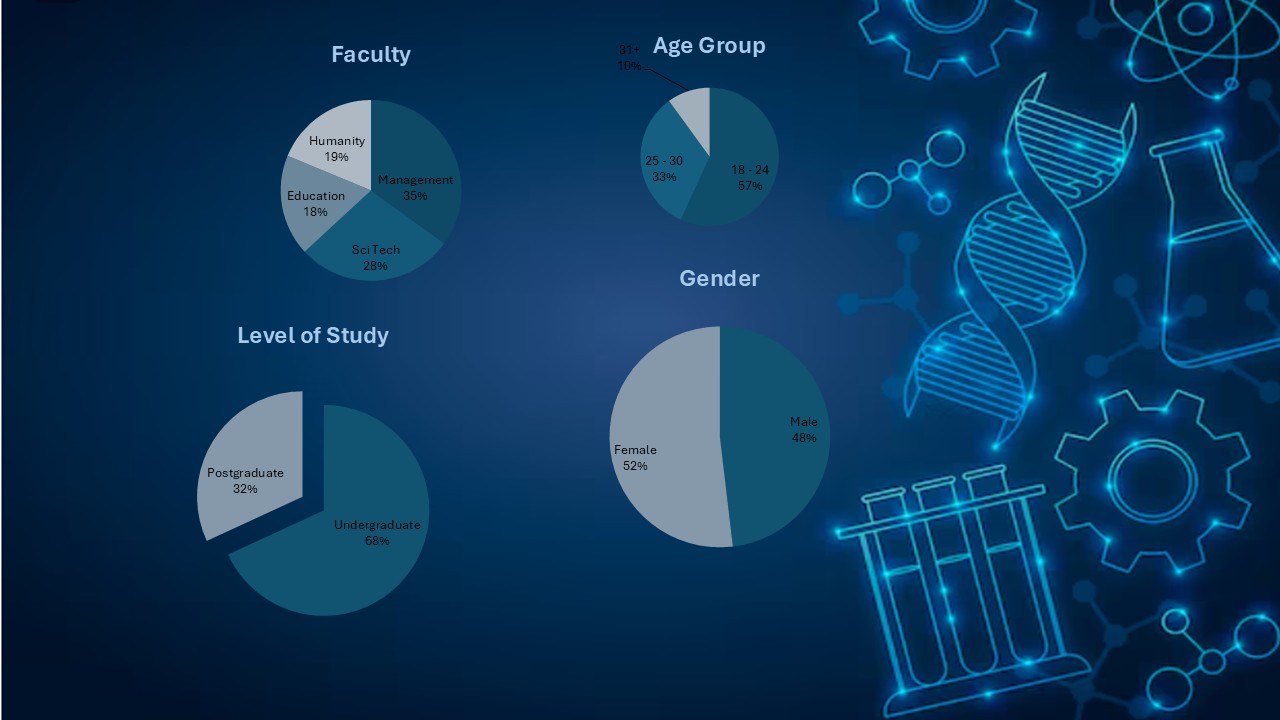
Technology integration has become a cornerstone of innovation in higher education, driven by rapid advancements in artificial intelligence (AI), digital learning tools, and Learning Management Systems (LMS). This study examines how university students perceive and engage with technology-integrated teaching practices, especially AI-supported learning, digital tools, and LMS innovations. Using a quantitative survey-based methodology, data were collected from 320 undergraduate and postgraduate students at a Sri Lankan university offering blended and distance-learning programs. The study aimed to (a) measure students’ perceived usefulness of AI-supported learning tools, (b) assess their satisfaction with technology-integrated teaching, and (c) examine the relationship between AI usage, LMS engagement, and learning outcomes.
A validated 38-item questionnaire measured four constructs: AI-Supported Learning, Digital Tool Use, LMS Engagement, and Perceived Learning Outcomes. Results indicate that students strongly support the integration of AI tools—such as automated feedback systems, intelligent tutoring interfaces, and generative AI chatbots—into teaching practices. Reliability analyses showed strong internal consistency (Cronbach’s alpha = .87–.93). Correlation and regression analyses reveal that AI-Supported Learning significantly predicts Perceived Learning Outcomes (β = .41, p < .001), while LMS Engagement (β = .36, p < .001) and Digital Tool Use (β = .29, p < .01) also contribute positively.
The findings highlight the growing relevance of adaptive, AI-enhanced ecosystems in higher education. The study recommends professional development for academic staff, structured policies on AI integration, and continuous enhancement of LMS design to maximize student engagement, autonomy, and academic performance.